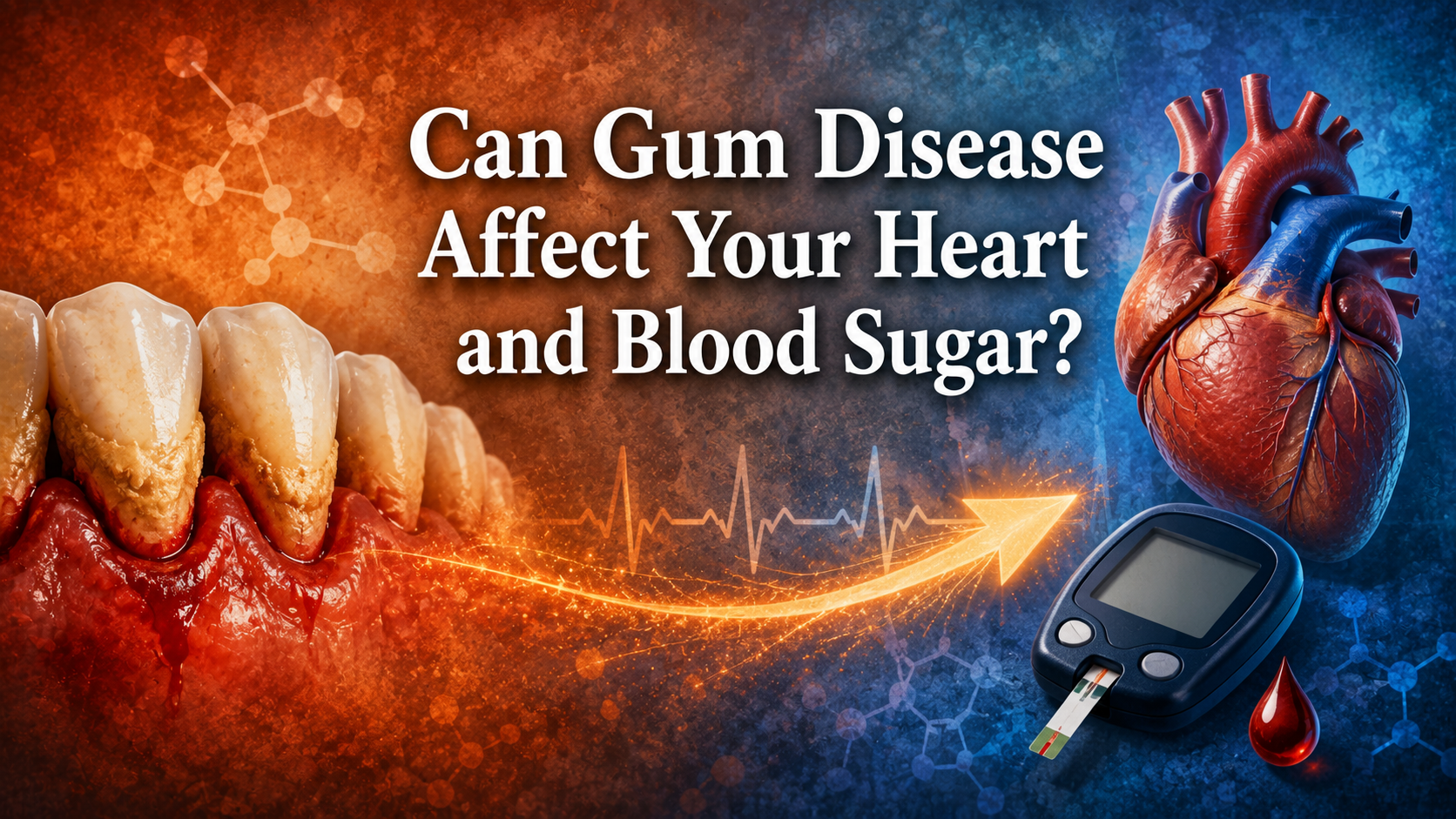
Bleeding gum and a heart attack seem unrelated. One belongs in a dental clinic; the other in a cardiology department.
Yet people with periodontal disease are more likely to have cardiovascular disease and diabetes. Researchers have also found signs of oral bacteria in arterial plaques and links between gum inflammation and inflammatory markers in the blood.
So, does gum disease contribute to illness elsewhere in the body—or does it mainly identify people who already share other health risks?
The evidence suggests that oral and general health are connected. But it does not prove that gum disease directly causes heart attacks or diabetes.
What is periodontitis?
Plaque accumulating around the teeth can inflame the gums, causing gingivitis. If inflammation spreads deeper, it can damage the tissues and bone supporting the teeth. This more serious condition is called periodontitis.
Over time, periodontitis can cause gum recession, loose teeth, and tooth loss. However, missing teeth are not a precise measure of gum disease. Teeth can also be lost through decay, smoking, trauma, treatment decisions, or limited access to dental care.
How could gum disease affect the body?
A review published in the American Journal of Preventive Cardiology describes several plausible pathways.¹
Inflamed periodontal tissue can become damaged and ulcerated, allowing bacteria or bacterial products to enter the bloodstream temporarily. Periodontitis may also increase inflammatory signals such as C-reactive protein and interleukins.
These pathways matter because chronic inflammation also participates in insulin resistance, blood-vessel dysfunction, and atherosclerosis.
But biological plausibility is not proof. Finding oral bacteria in an arterial plaque does not show that they created it. Similarly, lowering an inflammatory marker does not automatically mean fewer heart attacks.
The problem of shared risk factors
Periodontitis, cardiovascular disease, and diabetes share many risks:
- Smoking
- Ageing
- Obesity
- Poor diet
- Physical inactivity
- Socioeconomic disadvantage
- Limited healthcare access
This creates confounding.
For example, people with severe gum disease may experience more heart attacks partly because they smoke more, have poorer glucose control, or face barriers to preventive care.
Statistical adjustment helps, but it cannot perfectly remove every difference between people with good and poor oral health.
Periodontitis may therefore be both a disease and a marker of accumulated metabolic, behavioural, and social risk.
What does the cardiovascular evidence show?
A large Korean study followed 247,696 adults for a median of 9.5 years.² During that time, 14,893 experienced a major cardiovascular event.
Before adjustment, periodontal disease was associated with a 17% higher relative hazard of cardiovascular events. After researchers accounted for age, smoking, diabetes, blood pressure, body weight, income, and other factors, the association disappeared:
- Unadjusted hazard ratio: 1.17
- Fully adjusted hazard ratio: 1.00
This suggests that shared risk factors explained much of the initial relationship.
The same study found that frequent brushing and professional cleaning were associated with fewer cardiovascular events. But this does not prove that brushing prevented them.
People who care for their teeth may also exercise more, take medication more consistently, eat better, and attend medical screenings. This is known as the healthy-user effect.
The study showed an association between oral hygiene and cardiovascular outcomes—not a direct preventive effect.
Diabetes and gum disease
The connection with diabetes is more firmly established.
High blood sugar can impair immune function, reduce healing, and intensify inflammation. People with poorly controlled diabetes therefore tend to develop more severe periodontal disease and lose more teeth.
The reverse relationship may also exist. Periodontal inflammation could add to the body’s inflammatory burden and make insulin sensitivity slightly worse.
A 2026 systematic review examined 28 longitudinal studies involving more than 300,000 people.³
People with periodontitis had a 26% higher relative incidence of type 2 diabetes:
- Hazard ratio: 1.26
- 95% confidence interval: 1.16–1.36
Diabetes was also associated with a modestly greater risk of later periodontitis and an 11–16% higher relative hazard of tooth loss.
Because these studies followed people over time, they provide stronger evidence than cross-sectional surveys. But they remain observational.
Some participants may already have had insulin resistance or undiagnosed prediabetes. Diet, body weight, smoking, income, and healthcare access could still explain part of the association.
The safest conclusion is that diabetes and periodontitis predict one another over time, but neither direction has been proven fully causal.
Does treating gum disease improve systemic health?
Periodontal treatment clearly benefits the mouth. It reduces bleeding, inflammation, and further tissue damage.
Some trials also report modest improvements in inflammatory markers and HbA1c after treatment. But these are intermediate outcomes.
An umbrella review examining 293 systematic reviews found many statistically significant links between oral and systemic diseases.⁴ However, about nine out of ten reviews were rated low or critically low in methodological quality.
The review also found stronger evidence for improvements in inflammation than for prevention of major disease.
Current research does not convincingly show that periodontal treatment prevents:
- Heart attacks
- Strokes
- Cardiovascular death
- Diabetes
- Long-term diabetic complications
Improving a biomarker is not the same as preventing disease.
The takeaway
The mouth is not separate from the rest of the body.
Diabetes can worsen periodontal health, while periodontitis is associated with a modestly higher incidence of diabetes. Gum disease is also associated with cardiovascular disease, although shared risk factors explain at least part of that relationship.
Good oral care remains important. Regular brushing, cleaning between the teeth, dental assessment, and periodontal treatment protect the gums and teeth.
But dental care should complement—not replace—blood-pressure control, lipid management, glucose control, smoking cessation, physical activity, nutrition, and prescribed medication.
The evidence supports taking oral health seriously. It does not support presenting gum treatment as a hidden cure for heart disease or diabetes.
Strength of evidence
Periodontitis and cardiovascular disease: Moderate association evidence
Diabetes and periodontitis: Moderate evidence
Periodontal treatment improves oral health: Strong evidence
Treatment improves some systemic markers: Moderate evidence
Treatment prevents cardiovascular events or diabetes: Insufficient evidence
References
- Gianos E, Jackson EA, Tejpal A, et al. Oral health and atherosclerotic cardiovascular disease: a review. Am J Prev Cardiol. 2021;7:100179. doi:10.1016/j.ajpc.2021.100179
- Park SY, Kim SH, Kang SH, et al. Improved oral hygiene care attenuates the cardiovascular risk of oral health disease. Eur Heart J. 2019;40(14):1138-1145. doi:10.1093/eurheartj/ehy836
- Botelho J, Singh S, Varenne B, et al. Oral health and diabetes: a systematic review and meta-analysis. Lancet Public Health. Published online March 19, 2026. doi:10.1016/S2468-2667(26)00045-9
- Botelho J, Mascarenhas P, Viana J, et al. An umbrella review of the evidence linking oral health and systemic noncommunicable diseases. Nat Commun. 2022;13:7614. doi:10.1038/s41467-022-35337-8